Sunday, June 23, 2024

Through marriage the creative love of God becomes pemanently active in human society

 The growth of human society which God wants to effect takes place to through human cooperation. The continuation of humanity is dependant on the exercise of the participation of human beings in the creative act of God through the exercise of their sexual complementary. Humanity as such does not exist. It exists only as man and woman . It is only in togetherness that human existence can be fulfilled in the fully human sense.


Monday, April 22, 2024

Marriage is a natural sacrament of divine love.

 Despite the fact that the Bible raises human sexuality and the relationship between man and woman to such a high level, it never deifies sex or erotic love in the way that it was  deified in other religions of the ancient Near East. The finite  and limited love between man and woman is rather the image of an unconditional limitless love which God has for human beings. We may say that marriage is an earthly reality which prepares human beings to enter into that perfect communion with God. "It is therefore possible to speak, in this sense, of a natural sacrament of marriage, as indeed the Church's tradition  does.


Thursday, February 15, 2024

Marriage in the Old Testament. here we deal with the practice and understanding of marriage in the life of the Israelites beginning with Abraham.

 Types of marriage .  The marriage practice of the Israelites was very much influenced by by the neighboring peoples. There are four types of marriages in ancient Israel:  Polygamy (David and Solomon) which seems to have been the privilege of the rich, bigamy (Ieah and Rachel for Jacob), concubinage (Abraham, Sara and Hagar), which involved a legalwife and a concubine, and monogamy which received more insistence manly in the post exilic period.

Marriage celebration. Marriage wasa family affair which required actually no public or religious ceremonies . It became effective by the mere act of bringing the bride into the house of the bridegroom. Though as an institution it was never in the hands of the priests, it was still celebrated with some religious elements for it was considered to be sacred.

Thursday, February 8, 2024

Theology of Marriage

 From the account of the creation it is clear that the sense  of complementarity and equity is the way that God intended the relationship between man and woman to be from the  beginning (Gen. 1,27). But the story of the fall clearly shows that the inequality of the sexes in the life of the Israelites was a punishment that resulted from the fall and was not intended by God from the very beginning. Obviously marriage was presented as God's plan to increase the human race (Gen. 1,28). There is a deep sense of complementary, sense of bonding, sense of unity in the narrative of the creation of Eve. This is manifested in marriage as is evident from Gen. 1, 20-24. The Genesis account clearly shows  that God intended marriage in terms of monogomy. The other trends entered into marriage practice through the influence of the people in the midst of whom the Israelites lived. In the later periods of the history of Israel, the concept of fidelity to the covenant between God and  Israel becomes aIs. model for marital relationship ( Is. 54, 6-7). Marriage is relationship that should not be taken lightly. In the book of Deuteronomy the indissoluble character of marriage is presented with some exceptions which Jesus would explain as a concession for human weakness (Deut. 24, 1-40). But prophet Malachi speaks of a significant change in the matter of indissolubility: "For I hate divorce, says the Lord, the God of Israel" (Mal. 2, 15-16).


Tuesday, November 21, 2023

Marriage in the New Testament

 Jesus' attitude towards marriage.This is expressed most clearly in Mark 10: 2-9, in a controversy with the Pharisees. Jesus is confronted with the question of divorce. Jesus does not enter into the casuistry, but raises the whole matter to a higher level.And points to the original order of God's creation. His conclusion is "what God has joined together, let no man put asunder". It would be wrong to understand the pronouncement of Jesus about marriage as a legal statement. It is above all a prophetic and messianic proclamation of salvation and grace. In Jesus' proclamation, marriage is seen both as part of the original order of creation and as an aspect of the order of salvation of God in his kingdom of love and faithfulness in future.


Friday, October 20, 2023

The Christological understanding of Marriage.

 There is a change in the ubderstanding of marriage with the coming of Christ. Humanity has a new being in Christ . Marriage which is close ly linked to humanity, as we have seen earlier, will have to be u nderstood in a new way. Paul expresses it by saying that Christians should marry "in the Lord" ( 1 Cor. 7,39). Through Baptism an ontological change or a deep personal transformation takes place in the Christians. They are united with Christ not merely on an ideological plane, but on a personal level. In marriage the relationship between husband and wife is grafted into the personal relationship between Christ and the Church established by Christ (Eph. 5, 25). When Christians enter into marriage relationship the following take place:

The key to unity between husband and wife is in the fact that are integrated into the self- gift of Christ. The subjection of the wife to the husband should not be understood in a juridical sense, but in a personal and organic sense; in the ssssssame way the self-gift of the  husbamd to the wifeshould also be understood. Their roles as husband and wife acquire a mystical dimension through Christian marriage. There is no superiority or inferiority, but only complementarity of function. This is expressed very beautifully in 1 Cor. 7, 4. "For the wife does not have authorityover her own  .body, but the husband does;likewise the husband does not have authority over his own body, but the wife has". Thus a new kind of marriage takes place when Christians enter into marriage in Christ. It is not merely a marriage of creation, but a marriage of the new creation which integrates them into the self-giving of Christ.


Monday, August 21, 2023

Marriage in Christian tradition.

i) In the Patristic Period. The early Christians took great care to see that the Christians entered into marriage by choosing partners who were members of the faith community because of the deep meaning that they gave to Christian understanding of marriage in Christ which we have explained above. Apart from that there were no Christian marriage rituals, they simply got married according to the civil customs and ceremonies of the day. There was little involvement of the clergy and their presence was notrequired for validit. The only active role of the clergy was the blessings of the spouses a custom that became widespread without becoming obligatory and without a prescribed formula. In some cases there was a Eucharistic celebration at which the newly wed participated and received the blessing. We have evidence of a nuptial Mass in the Roman Sacramentaries from 6th century onwards.

ii) n the Middle Ages. From 11th century onwards, due to instability and weakening of civil authority, the Church took over the civil regulations of marriage. Marrige is  now conducted in  face ecclesiae (in the presence of the Church) and the social elements peculliar to earlier secularform were now incorporated into the marriage liturgy, which had become a liturgical rite conducted by the priest. It is at this time that the Church decides that consent (the Roman juridical; element) and the consummation (the Franco-Germanic personal element) enter as the constitutive elements of marriage. It is Pope Alexander III who declared consent as the essence of the bond of marriage and that the bond is indissoluble only after consummation. Hence the concept of marriage ratum et consummatum.

iii) The Coucil of Trent. The Council of Trent in the polemic against the Reformers stressed the sacramental nature of marriage and the power of the Church to regulate marriage. It also sought to combat the evil of clandestine marriage. It declared that in future the only valid form of marriage for Catholics would be consent declared before a priest and two witnesses. The rite itself became juridical in nature with the focus on consent and ratification of consent by the priest. This form of the rite continued until very recent times.


Monday, August 14, 2023

The teaching of Vatican II. This represents a change of perspective. Some of the major points are:

i) There is a shift from the juridical to the more personalistic concept of marriage 'Contract gives way to the more biblical 'covenant '. "The intimate partnership(foedus=covenant) of life and the love which constitutes the married state is rooted in their irrevocable personal consenr" .

ii) Conjugal love is the concrete essence of Christian marriage , reflecting as it does the covenantal love of Christ for his Church. " He abides with them in order that by their mutual self- giving spouses will love each other with enduring fidelity as he loved the Church and delivered himself for it ".

iii) The terminology of primary and secondary ends is abandoned and the values of marriage are listed without any hierarchical preference.

iv) The sacramentally of marriage is not something added to the marriage union established through human love.. "Authentic married love is taken up into divine love and is ruled and enriched by the redemptive power of Christ and the action of the Church".

v) There is an emphasis on the necessity of faith commitment for the sacrament of marriage. Marriage is  not just between baptized Christians, but between Christifidelies, faithful Christians. All these elements are reflected in the introduction to the New Rite of Marriage.

Thursday, May 11, 2023

ELEMENTS FOR A CORRECT UNDERSTANDING OF CHRISTIAN MARRIAGE TODAY

 Marriage as part of God's plan.

 i) The religious basis of marriage.  Christians speaks of marriage being instituted by God as part of an overall plan or design for creation. They are implying that there are some givens which cannot be changed according to human whims or intention. A religious sense of reality in general insists that people need to be guided in their decisions by the realization of something greater that is present of the heart of the world. They must drew upon the fundamental rhythm of God's creation to keep their sensitivities alive.. The human agenda is not the domonant one.

ii) The social basis of marriage. The sense of being part of a greater living whole, the society, is really   the background for the Christian insistence that marriage in the Church is not simply an agreement laid down by the mutual consent of the parties involved. The couple chooses to marry in the midst of the community because it is an event that affects the rest of the communituy as well as their relationship with that community.

iii) The ecclesial basis of marriage. St. Paul speaks of Christian marriage as a union between man and woman in Christ. Those who live in Christ through the sacrament of baptism constitute the Church Christian social life has its foundation in Baptism. Christian marriage is a special expression of the new life received at Baptism, a sacrament of the Baptism reality. The self-gift of Christ in his death and resurrection which is sacramentalized in Baptism becomes visible, public and permanent in a personal way in the lives of those who enter into marriage bond. Therefore Christians marry not only in Christ, but in the Church.


Monday, April 24, 2023

Marriage is an authentic expression of love.

 The underlying principle that becomes permanently operative in every manifestation of Christian life is love. Christian will be known as such by, their love for one another. Christian life consists in translating Divine love into human love. It is necessary to distinguish love from liking. The former is other centred, while the latter is self centred. Since human beings are made according to the image of God, they are complete in their being only when they are related to one another in love by which they reproduce the core  of divine life, a life of communion in the diversity of the Three Divine Persons. Every Christian is called to live in communion. Each one responds to this call according to the contribution which they have to make for building up of the kingdom of God. Understood inthis sense marriage is a vacation. The natural attraction which the couples feel towards one another has to be transformed into a response of love. For this it is necessary to free the natural attraction of its selfish content. Here we have the difference between love and lust. Love is life-giving, while lust is destructive of life. We can distinguish three qualities in love:


Sunday, April 23, 2023

Personal Love.

 a) The book of Genesisclearly expresses the fact that human beings find thier true identity only in relationship with other human beings. "The man gave names to all cattle and to the birds of the air, and to every animal of the field but for man there was not found a helper as his partner"(Gen. 2. 20). In relationship people are recognized and accepted as persons. This is what happens in personal love. This is an essential requirement for Christian marriage. The following can be considered as the charasteristics of this personal love.

i) Free to personaland interdependent existence. An essential aspect of the dialectics of love is that it jointstwo persons together in the most intimate way and by doing so at the same time sets them to be themselves. Only in this way can there be full complementary in thier relationship.

ii) Inter subjective communication mediated through sexually. It is there that marriage becomes fully operative. Sexually expresses and mediates intersubjective communication . Sexual union is a deep act of personal communication in which the whole person , body and soul are involved. Just as in God the Three Persons are distinct and yet united in love, in human communion, of which sexual relationship is one of the best images, there is perfect personal distinction and freedom and yet a perfect oneness in love.it is only to the extent that this distinction and communion are integrated into personal bonds that human sexually can be realized in the human sense. If these personal bonds are lacking , human sexuality can only result in the disintegration and loss of dignity of the human person.

iii) It manifests itself as constant growth in personal relationship. the most all-embracing form of personal bond between man and woman is marriage. More than any other forms of human relationship marriage embraces the whole person of both partners in all dimensions This is the reason why a couple that have lived their marriage union in all its integrity become closer and closer to one another as they grow older. The permanence of marriage is also the result of this integral personal relationship which the couples have been practicing throuhout their married life.

iv) This personal character of love includes justice. This personal character od love also demands that at least a minimum of physical health, social and economic requirements are needed if a marriage is to be successful. This means that they give to each other his or her due and thus restore equality in the relationship between the persons.

v) It is a love that demands self-denial and sacrifice. The most important service which the Churchhas to render is that of making young people capable of loving on thr basis of Christian faith.It is necessary that we bring home to people the fact that the success of marriage consists in successfully living a life of love which is not possible without self denial and sacrifice. The fundamental law of Gospel animated life is very much valid here: "He who loses his life will find it" (Mt.10. 39). One of essential elements that should be included in our catechesis of preparation for marriage is that deep personal relationship is not possible without denying self. Although this maybe correctly called an ascetical attitude and practice in our traditional language, I would call this an aesthetic attitude and practice is as much the sacreficial element is given a positive meaning. It lays the foundation for a life ofcomplementarity in which the differences are not only acceptedand tolerated, but appreciated and fostered. This will truly bring out the meaning of those words which we find often in commercial advertisements:

 "Made for each other"

Tuesday, January 3, 2023

Fruitful love

 b) One of the essential aspects of love is that it does not stay with itself, but tends to be fruitful. In the past fruitfulness of love was explained in a purely biological sense using the Genesis text "God created humankind in his image, in the image of God he created them,male and female he created them. God blessed them, and God said to them: 'Be fruitful and multifly and fill the earth"(Gen. 1,27-28). This proved to be quite unsatisfactoryexplanation because in contrast to the sexuality of animals, human sexuality displayed certain distinctive features which showed that its function was not restricted to the preservation of the species. In what way, then can we express the specificity of the fruitfulness of Christian marriage?

i) Love is impelled to realization, objectification and embodiment in a sharedthird party. The child is not a mere biological product: he or she the embodiment of the communion in love between the parents; he or she objectfies the self gift of the parents to one another. The two partners normally find themeslves in a new way in their child and the latter can thrive only as human beings if they are secure in the mutual love of the parents.

ii) Love is fruitful also through growth in mutual love of the couple. Every childless marriage is not a fruitless marriage unless there is a conscious exclusion of fruitfulness and deliverate closing in on itself for egoistic reasons: then it becomes a perversion. Even if the immediate reason for physical union of the partners is not to beget further descendants , but to deepen and enrich their own experiece of mutual love, this is of indirect benefit to the descendants who are already in the family.

iii) Love of the partners in marriage is fruitful also from a sociological and culture point of view. Marriage and family cannot be regardedby Christian as a merely private matter.

          Faithfulness in love.The shared responsibility of the partners for their children is one of the convincing arguments in favor of the indissolubility of marriage. However, this third good good of marriage, faithfulness can be more directly attributed to the essential meaning of love itself.

i) According to Gabriel Marcel, loving another person means telling him or her: You will not die. The bond that is established through love is not a mere legal bond: it affects our whole person; it sets in motion the whole of one's being towards the other. If marriage is founded on love not on likes and dislikes, not not on legal contracts alone, but a personal act of self-gift, it cannot be terminated because that will be going against the very nature of love.

ii) Faithfulness does not impede the exercise of human freedom. Freedom is different arbitrariness. The former is the capacity to relate oneself to all; it sets in motion a movement which cannot be stopped. The latter is to be guided entirely by self., whether it be one's mood, liking or ideology; it sets in motion towards oneself, just the opposite of the movement of freedom.

iii) The love with which  we love the other and commit ourselves to the other is a love that is participated from God. The definitive bond of faithfullness in marriage has an essential religious dimension, namely it is a participation in the divine love, Just as God's love is always faithful;so also the love of those who participate in it will also be definite.

iv) In the Christian marriage man and woman are able to find their definitive status in the faithfulness. They become one flesh or one in mind body (Gen.2,14; Mk 19;8; Eph.5,31); in other words they become a 'we' person. The mutual bond of faithfulness creates somthing that transcends the single personand binds the history of the two people definitively and at the deepest level together,

Saturday, October 22, 2022

Indissolubility of Marriage

c)  Indissobility is a distinct charasteristic of Christian marriage. In fact this Christian position is questiond by some religions and many governments and members of civil society today. Although we have indirectly mentioned this problem in the previous paragraph dealing with the faithfulness in love as a characteristic of Christian marriage, we need to clarify certain issues connected with it.

a) The basis of definitiveness of the marriage bond is founded on the order of creation itself : "Then the man said : this at last is bone of my bones and the flesh of my flesh; this one shall be called woman , for out of man this one was taken. Therefore a man leaves his father and mother and clings to his wife, and they become one flesh" (Gen. 2:23-24). From this is clear that the strenght of bond is resting on the existential complementarity of both.

b) Later on the Old Testament the fidelity between the husband and wife is compared to the fidelity of Yahweh to his people which is irrevocable.Jesus makes this clear in his discussion with Jews that indissolubility of marriage was its original character. (Mk. 10, 2:12 and Mt. 19:3-9). Marriage bond, in this sense should be understood as a covenant rather than as a contract. See also Lk. 16:18.

c) Indissolubility is not based merely on a law of the Church, or an a moral norm, but rooted in the sacramentality of marriage itself. The divine element enters into this bond.

d) The principle of indissolubility is solidly based on Scripture. But in the course op time, as in the case of Old Testament at times there have been some cases of leniency. But these are exceptions and not violation of the law; but in modern times such exceptions are never entertained.

e) In this context, there is the question of Pauline privilage (1 Cor 7::12ff which cannot be termed divorce because for us Christians divorce is strictly applied to the breaking of the sacramental bond. In the case of Pauline Privilege, the sacramental bond is not fully realized: hence there cannot be divorce in the strict sense.

f) The indissolubility of marriage is unambiguously taught by the Council of Trent, Marriage bond cannot be dissolved for any reason whatsoever. The only thing that the Church can do is to declare a marriage null and void , by which she states that the marriage never took place for want of free consent or due to the presence of certain imprdiments which invalidate the marriage.

g) A non- consummated marriage can be dissolved by the Roman pontiff for a just cause (Can:11-42).The just cause can be discord without hope of reconcilliation, civil marriage by one party , probable impotence , incurable disease contacted after marriage, defect of consent. Religious profession invalidating marriage is not mentioned in the present code.


Monday, October 10, 2022

SACRAMENTALITY OF MARRIAGE

 Marriage is one of the seven sacraments or symbolic actions of the Church by which Christ continuesto accomplish the mystery of redemption. In Xhristian sacramental system Eucharist has its centrality. All the other sacraments are oriented to the Eucharist. Matrimony has a special role in this Eucharist centred sacramental system in as much it prepares the community that celrbratesthe Eucharist.Sacramentality is not somethingsuper- added to the human reality of marriage, but is rather its intrinsic elevation elevation and sanctification  through the baptism which the couple has received. "Authentic married love is caught up into divine love and is governed and enriched by Christ's redeeming power and the saving power of the Church...for this reason, Christian spouses have a speacial sacrament by which they are fortified and receive a kind of consecration in the duties and dignity of their state. By virtue of this sacrament, as spouses, they fulfill their conjugal and family obligations: they are penetrated by the Spirit of God. This Spirit suffuses their whole lives with faith , hope and charity" We shall now analizeand see the various elements that constitute the sacramental process of Christian marriage.

a) Sacraments are the efficasious signs of grace.  

Sacraments are instituted by Christ. They are efficacious signs of grace. Grace is nothing but the love of God. This is present in the world always; when it is expressed through a sign it becomes experiential. in the sacrament of matrimony the couple experience the love of God manifested in Christ's love for Church, both physically and spiritually. Christ is the one who acts in the sacraments. The Church is the minister of Christ who makes the effects of the sacrament visible. Being a sign of salvation , sacraments also have an eschatological significance , that is, they are prognostic expressions of the Kingdom to come when human love will be permanently taken up[ and made experiential in the risen body of he saved.

b) Marriage, Instituted by Christ as sacrament. 

The Sacramental nature of marriage cannot be proved by using individual words of institution. It is based on the fact that the marriage bond is related to the saving work of Christ. In the letter to the Ephesians the covenant between man and wife in marriage is seen as the image of the covenant between Christ and the Church.  "Just as Christ loved the Church and gave himself upn for her in order to make her holy by cleaning her with the washing of water by the word, soas to present the church to himself in splendour, without a spot or wrinkle or anything of the kind -- just so that she may be holy and without blemish. In the same way husbands should love their wives as they do their own bodies... This is a great mystery (sacrament)"(Eph. 5,25-32). Besides , there are also the New Testament statements regarding marriage in the Lord' which we have already explained.

c) The sign of the sacrament of marriage is the human bond of love which characterizes every marriage.

When the baptized enter into this bond, it becomes the signs of Christ's self gift to the Church by which God's grace , divine life enters into the life of the couples. In order to make this sign authentic, it must be purified of all selfishness. The love and faithfulness that Christian husbands and wives have for each other are the effective sign, the fulfilled symbol and the real epiphany of the love of God that has appeared in Jesus Christ. If marriage represents a special form of being human in Christ that is based on Baptism, it is also a special form of sharing in the death and resurrection of Christ. If marital love is seen as existing undre the sign of Christ's cross, it must also been seen as being sustained by giving and being given.

d) Marriage is the sacrament of the Church.

Just as baptism is the ecclesial espression of the faith of the believer in Christ, sacrament of marriage is an ecclesial expression of the love that is given and recieved by the couples which symbolizes Christ's love for the Church. The Church plays an important role in the celebration as well as in living the sacrament of marriage. That is why Vatican 11 calls the family a 'domestic Church' . Although it is the bride and bridegroom who give the sacrament to each other, sacramental marriage is a covenantal act - public and legal - concerning the whole community of believers. This is the reason why the validity of marriage requires that the marriage be celebrated in the Church and before the ministers of the Church.

e) Marriage is an eschatological sign.

The festive mood of a wedding is a symbol of the joy and the fulfillment of human hope that will be present at the end of time (Mark 2, 19ff, Mt. 22, 1-14, 1-13). The means used by God for for the growth of the children of God is the sacrament of marriage. Besides , the growth towards the fullness of human life, which is an eschatological goal, will be normally realized through the family where the love is already active.





Saturday, October 1, 2022

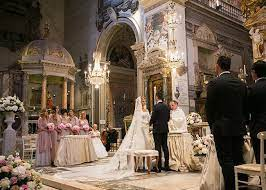
Liturgy of Marriage Celebration

 Like other Sacramental rites, marriage now takes place withen the Mass.Since it is a sign of the covenant between God and humanity and since Eucharist is supremely the renewal of the covenant, the appropriateness of this arrangement is obvious. Besides it is very meaningful to integrate the mutual self-gift of the couple inti yhe self-gift of Christ to the Church. A mixed marriage with the baptized person is normally celebrated outside Mass, although it could celebrated during Mass with the permession of the local ordinary.

Marriage being a sacrament of the Church it is celebrated in facie ecclesiae, that is, in the presence of the official minister of the Church, In the Latin Church, it is ordinarily understood that the spouses, as ministers of Christ's grace mutually confer upon each other the sacrament of matrimony by expressing their consent before the Church. Therefore the couples are the ministers of the sacrament of Matrimony in the Western Chuch. In the Eastern liturgies the minister of this sacrament is the priest or the Bishop who, after receiving the mutual consent of the spouses, successively crowns the bridegroom and the bride as a sign of the marriage covenant.. 

The presence of the official minister of the Church is necessary for the validity of the marriage. We can distinguise for aspects of the reality of Christian marriage as it is presented in the Rite of marriage of the Roman Rite :

a) Marriage is the celebration of the Church. The introductory rites put in evidence the fact that the relationship between the couple is, through the sacramental celebration, entering into the wider relationship of which the Church is constituted.. The parish community rejoices on this happy occasion because through the celebration of marriage the love relationship that exist in the community is going to be expressed by two individuals in terms of their self-gift. The introductory dialogue expresses the content of their mutual dedication and their commitment to fulfill the conditions of marriage: freedom indissolubility, fecundity and to take up their responsibility as spouses and parents.

b) Marriage is a covenantal act. The consent which they exchange after the liturgy od the Word is not a mere legal contract, but a covenantal act by which both of them enter into each other's gamut of relationships. It is an expression of their total and unconditional belonging to one another. The terms of this covenant is their human love purified of sefishness and sanctified in self-gift.  Grounded in Christ's mystery this intimate community is made holy by the presence and action of the Holy Spirit. The word of God which they have listened to will be the interpreter of their lives henceforward and not their ideology of their likes or dislikes.

c) Marriage as an act of consecration. The nuptial blessing that is imparted to the newly wed after the doxology is an act of consecration. The covenant is ratified by God by the action of the Holy Spirit through the Ministry of the Church. The reality of marriage is fully inserted into the history of salvation. It recalls to mind the first blessing pronounced by God on Adam and Eve : all the other blessings that are pronounced on the couples in the course of time are a renewal of that blessing . Henceforward, the relationship between the newly wed people will be regulatedand actualized in the spirit of this ratification effected by the Holy Spirit.

d) Marriage as a fruitful union. This is the content of the final blessing given by the priest. The exchangeof consent made fruitful by the blessing has now to become a reality in their daily lives. This fruitfulnesshas the following expressions : they give life to new members in the Church, they themselves grow in selflessness and thus bear witness to redemptive union of Christ with the Church: they build up Christian families which are the domestic Church  units which constitutes are the domestic Church in a locality. Thus the newly wed go into the world to live their alliance ratified before the altar. They become witnesses of the union of Christ with his Church. 

The new rite of marriage translates into ritual the basic theological elements of the sacrament of matrimony. Through its celebration they recieve the grace to live their commitment throughout their life. Marriage becomes not so much their initiative as a response to the call which the Lord has made to them in his Church.


Monday, July 11, 2022

SPIRITUALITY OF CHRISTIAN MARRIAGE

 Spirituality is the living of an adequate response which the human person are expected to give to the call of God moved and led by the Spirit of God. Seen in this light spirituality of married life has the following characteristic:

(a) It is the daily call and response.  While all the beings in this world with a specific pattern of behavior called natural law, the human beings are called into existence personally by God. Life is, therefore, a call and response. This is given at every moment and hence every moment ought to to be a response. In the case of persons this call is specific to each one and it manifests itself in different ways. In marriage it is the call of God given to a man and women mediated by each other. They respond to God through their mutual love. they make their life meaningful by this mutual daily response.

(b) The human love is become the sacrament of the love of God.  They manifest their response to God by their love for one another. By the sacrament of matrimony each becomes a grace to the other. Their human conjugal love becomes consecrated love.. This will not take place automatically. Since they carry with them their belonging to sinful Adam and Eve, they have to be constantly struggling to keep their love for one another free from selfishness. It is this ascetism of self-denial which makes their human love become the symbol of divine love.

(c) The acceptance of the cross as an expression of their covenantal love. The married couple will have to accept the differences of each. This is an integral part of the true love. This will be the cross that they have to experience daily. This does not characterize each one as the cross of the other. The cross is in the effort to relate to the other. But if they dedicatedly accept this cross and live it in fidelity , the relationship will result in an experience of the resurrection, giving them a lasting joy and happiness.

(d) The spirituality of sexual union. Sexual union at married couple is an expression of their love for one another in its highest form. If is done in a spirit of genuine love and not in a hedonistic spirit it will become the sacrament of the creative love of God. It will build up their communion in such a way that it will grow into genuine personal relationship lasting even unto death , continually experienced even when physical sexual pleasure becomes diminished. The presence of the spirit of God who is the real source of happy life is fully operative in the lives of such couple.

Friday, March 26, 2021

Mutual forgiveness

 An integral part of marital spirituality. We all belong to a sinful world, a world in which vengeance grows seven fold. But Christ has introduced us into a world in which forgiveness grows without limit. Living together with our differences which at manifest itself as alienation, we tend to offend or hurt one another. If it is the love of Christ that has united the couple in the married life, the element of mutual forgiveness must be an integral part of their life together. God has forgiven us all; it now remains for us to forgive one another in order to complete the redemptive work of Christ. The redeemed Christian family will be one in which this horizontal forgiveness and reconciliation is constantly operative.

Tuesday, November 10, 2020

Building up a Community of love.

 The love of the couple should overflow into their children. But care should be taken to make sure that it is a shared. love. The selfless love which bound the couple together now makes itself felt in the family through the selfless love towards their children and the selfless love of children towards one another.

Love nourished by prayer

 Communion with Christ who initiated the couple into the Trinitarian family must be nourished by a life of prayer which should characterize their life together. 

An atmosphere of love nourished by daily prayer which keeps alive the divine presence in their midst is a very important means to build up a Christian family.

Christian marriage is located within the great mystery of the union of Christ with the Church (Eph.5:32). 

The sacredness of marriage comes from the fact. The content and dynamics of this Mystery is God's love translated into human love. The heart of the sacrament of matrimony is precisely here.

Monday, October 19, 2020

Catholic Morality in Human Relationships

 Introduction

When married love is  lived in its most authentic nature, it is expressed in all life situations, becoming a witness, proclaiming and realizing the Kingdom of God: "It is in married and family love... that the Christian family's participation in the prophetic, priestly and kingly mission of Christ and his Church finds expression and realisation. Therefore, love and life constitute the nucleus of the saving mission of the Christian family in the Church and for the Church"(Familiaris Consortion [FC].50). The conjugal love of the spouses is fully expressed in fatherhood and motherhood, the fruit of their love, which makes them co-responsible for the gift of life, by protecting, developing, educating and evangelizing: "Christian couples are, for each other, for their children and for their relatives, co-operators of grace and witnesses of the faith. They are the first to pass on the faith to their children and to educate them in it. By word and example they form them to a Christian and Apostolic life"


Through marriage the creative love of God becomes pemanently active in human society

 The growth of human society which God wants to effect takes place to through human cooperation. The continuation of humanity is dependant o...